

Ads backing Republican candidates have highlighted their support for a $50 billion rural healthcare fund in the One Big Beautiful Bill Act — while ignoring its much larger cuts to Medicaid, which are expected to reduce funding for rural healthcare overall. Other ads similarly leave out the Medicaid cuts in misleadingly claiming that Democrats voted against funding for rural hospitals.

Access to healthcare is a major issue in many rural areas, where people tend to have worse health outcomes and experience various barriers getting care, including shortages of healthcare professionals, long travel times, financially strained hospitals and gaps in essential services like maternity care.
The 2025 One Big Beautiful Bill Act made a series of changes to Medicaid, the state-federal health insurance program for low-income people, including new work requirements and more frequent eligibility checks for certain working-age adults starting next year.
The law is expected to cut federal Medicaid spending by around $900 billion over a decade and increase the number of people without insurance by 10 million, including 7.5 million from Medicaid, according to projections from the nonpartisan Congressional Budget Office.
The $50 billion for rural health, known as the Rural Health Transformation Program, was a late addition meant to shore up support from wavering Republican lawmakers, who worried the bill’s reductions in Medicaid funding would be especially hard on healthcare providers in rural areas.
Here’s a closer look at some of the claims that ads from both sides are making about the law’s impacts on rural healthcare.
GOP Ads Leave Out Medicaid Cuts
In several key House or Senate races, groups backing GOP candidates have run ads highlighting the rural healthcare fund.
In Iowa’s 1st Congressional District, an ad from the American Action Network says Republican Rep. Mariannette Miller-Meeks “secured millions for our rural hospitals.” The same group’s ad in Colorado’s 8th Congressional District urges voters to thank Republican Rep. Gabe Evans for “voting to pass the biggest investment ever in rural healthcare.” The American Action Network is a sister nonprofit group of the Congressional Leadership Fund, which is endorsed by the House Republican leadership.

In Alaska, an ad from the group Last Frontier Action backing Republican Sen. Dan Sullivan, who is locked in a tight race for reelection, similarly celebrates the fund as “the biggest investment in rural healthcare in American history.”
And in Ohio, an ad from the group Choose Freedom Inc. tells viewers that Republican Sen. Jon Husted “supported a $200 million investment in rural hospitals, so families don’t have to go the extra mile to get the care they need.” That refers to how much Ohio received in the fund’s first round of awards last year.
What none of those ads mentions is that the same law’s cuts to Medicaid are expected to far outweigh whatever money rural hospitals get from the new fund.
The health policy research organization KFF estimated last year that the OBBBA would reduce federal Medicaid funding for rural areas by $137 billion over 10 years. The hit to rural hospitals alone — not counting standalone clinics, health centers and other providers that deliver care in those areas — could come to $57 billion, according to an analysis by the consulting firm Manatt that was commissioned by the National Rural Health Association, a group whose members include hospitals, health centers and other rural providers.
Leonardo Cuello, a Medicaid expert and research professor at Georgetown University’s Center for Children and Families, told us those cuts could squeeze hospitals in a few different ways.
As people lose coverage, hospitals will likely have to absorb more losses from treating uninsured patients who can’t afford to pay. The law also limits certain financing mechanisms that states use to fund their Medicaid programs and steer more funding to hospitals. Those limits could result in hospitals getting paid less for treating Medicaid patients, KFF has explained.
“This is a huge negative impact on rural areas that far exceeds any benefits coming from the rural health fund — which does have benefits,” Cuello said.
The way the Rural Health Transformation Program is designed also means that it’s not a direct replacement for lost Medicaid revenue.
A freestanding emergency room in Tennessee. Photo by RHF101 / stock.adobe.com
The fund allocates $50 billion over five years for one-time investments in rural healthcare, in accordance with certain priorities — preventing chronic disease, strengthening the rural health workforce, deploying technologies like AI and remote patient monitoring, and developing new models for how to pay for and deliver care in rural areas.
States apply for the funds; half the money is distributed evenly across states with approved applications and the other half based on factors like a state’s rural population and proportion of rural health facilities. The first awards were announced late last year and ranged from $147 million in New Jersey to $281 million in Texas.
For the most part, the money can’t be used to pay for existing services or make up for losses on uncompensated care. The health news site STAT recently reported that some hospital leaders worry about starting new programs they won’t have the money to sustain.
Cuello said the Rural Health Transformation Program could fund some valuable improvements in rural healthcare infrastructure, but it won’t replace the ongoing loss of revenue that hospitals rely on. He added that the rural health funds end after five years, while the Medicaid cuts — most of which take effect in 2027 or 2028 — continue indefinitely.
“From the point of view of a hospital, yes, you might be helping with some upgrades to some equipment they use, or they may end up with a better health record system,” he said. “You’re not changing the fact that you just cut a lot of their funding.”
We asked Choose Freedom Inc. about the Ohio ad’s failure to mention the Medicaid cuts’ impact on rural healthcare funding. “Husted voted for a massive investment in rural healthcare in Ohio,” an unnamed spokesperson for the group responded. “The only thing the ad left out was how former lawmakers, led by [former senator and current Democratic candidate] Sherrod Brown, turned their backs on these communities.”
We reached out to the American Action Network and a lawyer who is listed as the treasurer for Last Frontier PAC, and did not receive a response.
Misleading Claims That Democrats Voted to ‘Gut’ Rural Hospitals
In attacking Democrats for voting against the law that created the rural health fund, ads from GOP groups have also left out the impact of Medicaid cuts.
In the Georgia Senate race, for instance, Republican Rep. Mike Collins’ campaign is running an ad claiming his opponent, incumbent Democratic Sen. Jon Ossoff, “talks healthcare, but voted to gut rural hospitals.”

A similar attack appears in a recent ad targeting Rep. Chris Pappas, the Democrat running against former Sen. John E. Sununu for Senate in New Hampshire. “Pappas even voted against vital funding for rural and vulnerable hospitals,” intones the ad from No Going Back PAC, a super PAC with links to Trump’s political operation.
But again, whatever money will flow to those hospitals from the OBBBA’s rural health fund won’t be enough to make up for the loss of Medicaid funding in rural areas. Both Ossoff and Pappas have cited the impact of Medicaid cuts on healthcare providers as one of the reasons they opposed the law.

The Ossoff campaign also pointed us to a statement from the American Hospital Association opposing the bill that said it would do “irreparable harm to our health care system,” as well as local news stories about a Georgia hospital that closed its labor and delivery unit last year and cited the bill’s impending Medicaid cuts as one of the reasons for doing so. We reached out to the Collins campaign but did not receive a response.
Similarly, Pappas’ campaign directed us to a July 2025 news release from his office saying the legislation “made devastating cuts to Medicaid funding that is critical for New Hampshire hospitals and their ability to provide care to patients,” as well as a statement he provided to local news station WMUR in December calling the Rural Health Transformation Program funding “a drop in the bucket compared to losses our rural clinics, hospitals and communities will face.”
No Going Back PAC’s website does not provide a way to get in touch with it, and its FEC paperwork lists a generic email for a third-party compliance company. We reached out to Trump’s main super PAC, MAGA Inc., which according to the New York Times is funding No Going Back. We have not received a response.
Democratic Ads Cite Inexact Figures on Hospital Closures
Democratic-aligned groups, meanwhile, have run ads in several key races claiming that specific numbers of rural hospitals in certain states could close due to the OBBBA’s cuts.
As we explained above, the One Big Beautiful Bill Act is likely to impact the finances of many rural hospitals, and there have been anecdotal reports of some healthcare providers citing the anticipated loss of revenue from the law as a factor in deciding to cut services or close locations. But as we’ve written before, experts say it’s impossible to put a precise number on how many might close as a result.
An ad from the VoteVets Action Fund, which describes itself as a Democratic veterans’ group, says GOP Rep. Ashley Hinson, who is running for Senate in Iowa, voted “to push 20 rural hospitals to the brink of closing.”
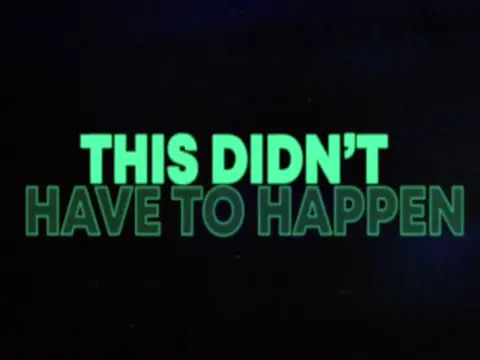
Similarly, an ad that ran last month from another Democratic group, House Majority Forward, said Republican Rep. Brian Fitzpatrick, who represents a closely divided district in the Philadelphia suburbs, “voted to cut Medicaid for struggling families, threatening closure for 25 hospitals.”
Ads making similar claims have run in the Ohio Senate race and House contests in North Carolina and Virginia.
Some researchers and advocacy groups have produced estimates of how many hospitals could be at risk under the bill, based on pre-existing financial challenges and how much they rely on revenue from Medicaid. But those are broad assessments of risk factors, not predictions, and different methodologies have come up with different numbers.
VoteVets told us the Iowa number comes from a July 4, 2025, op-ed in the Iowa Capital Dispatch, which said at least 20 rural hospitals in the state were already “seriously threatened with closing.” The article doesn’t cite a source, but it’s likely from a June 2025 report on at-risk rural hospitals put out by the nonprofit Center for Healthcare Quality and Payment Reform.
CHQPR defines hospitals as at risk if they lose money on patient services and have low cash reserves. The June 2025 numbers, which predate the OBBBA’s passage, include 20 such hospitals in Iowa. CHQPR’s most recent data, from July, list eight. (The ad began airing July 29, according to ad-tracking service AdImpact.) Neither report aims to assess the impact of the OBBBA; the data are based on hospitals’ past financial performance.
House Majority Forward didn’t respond to a request for comment on the Pennsylvania ad. Pennsylvania Gov. Josh Shapiro, a Democrat, did say at a press conference last year that 25 rural hospitals in the state “are likely to shutter in the next few years” because of the Republican law. His office told us at the time that figure was based on hospitals that had negative operating margins in fiscal year 2023.
Other estimates have come up with smaller numbers, including a January 2026 report commissioned by the Hospital and Healthsystem Association of Pennsylvania that found as many as 12 to 14 hospitals in the state could close in the next five years without intervention, citing both the federal cuts to Medicaid and ongoing underfunding from the state.
More broadly, experts told us various factors make it hard to predict how many hospitals will close or scale back care as a direct result of this law, including that its effects will be hard to disentangle from the multiple other challenges rural hospitals face.
“It will be hard to say that any hospital closures or other providers going out of business … is directly related to these Medicaid changes,” Jennifer Tolbert, deputy director of the Program on Medicaid and the Uninsured at KFF, told us when we wrote about similar claims last year.
However, she said, the reductions in Medicaid funding will clearly have financial implications for providers, including a rise in uncompensated care as people lose insurance and possible cuts to reimbursement rates as states respond to new restrictions on financing mechanisms.
Cuello similarly said the precise impacts are hard to pin down, in part because the cuts have largely not taken effect yet. Economic conditions, how the law is implemented and how hospitals themselves respond will also matter.
But given that many rural hospitals are already on shaky financial ground — nearly 200 have closed or stopped offering inpatient care since 2005, according to researchers at the University of North Carolina — Cuello does expect to see an impact due to the OBBBA, also known as H.R. 1.
“The current snapshot is concerning, and the concern is going to increase,” he said. “I don’t know that anybody has quantified or tried to guess exactly how many more hospitals are going to close because of H.R. 1. But if you take the current rate of hospital closure, which is already significant, we do expect that to increase based on H.R. 1.”
“No one can predict with any certainty whether any individual rural hospital will close or whether a change in Medicaid revenues will cause them to close,” Harold Miller, the Center for Healthcare Quality and Payment Reform’s CEO, told us in an email. “Most hospitals that are at risk of closing work very hard NOT to close. Most of them are able to avoid closure, but a few are not.”
Miller said the specific impacts will depend on a host of variables, including how many people lose Medicaid in a particular community, what states do in response to the cuts and whether some hospitals can negotiate higher rates from private insurers or tap into other sources of revenue, such as state or local tax revenue.
Miller said large rural hospitals tend to be in better shape financially, because they make enough money on privately insured patients to make up for losses on Medicare and Medicaid patients. It’s small rural hospitals that are generally most at risk, because they typically lose money treating both publicly and privately insured patients. The share of patients with Medicaid also varies from hospital to hospital.

“The issue for small rural hospitals that are currently losing money is that even if the loss of Medicaid revenues is small, a small loss makes their situation even worse than it already is,” Miller told us. “On the other hand, large rural hospitals that are not currently losing money will potentially be able to sustain the loss of Medicaid revenues.
“Conversely, because there are many small rural hospitals that are losing money now, even before the OBBBA changes are implemented, they would still be at risk of closing even if OBBBA was repealed or changed significantly,” he said.
None of this is to say that the One Big Beautiful Bill Act won’t impact rural hospitals. But it’s unclear at this point exactly how many will be pushed, as the Iowa ad puts it, “to the brink.”
======
-- By Cierra Jacobs
© Copyright 2026 JWT Communications. All rights reserved. This article cannot be republished, rebroadcast, rewritten, or distributed in any form without written permission.


No comments:
Post a Comment